
Class Inequality in the Digital Society

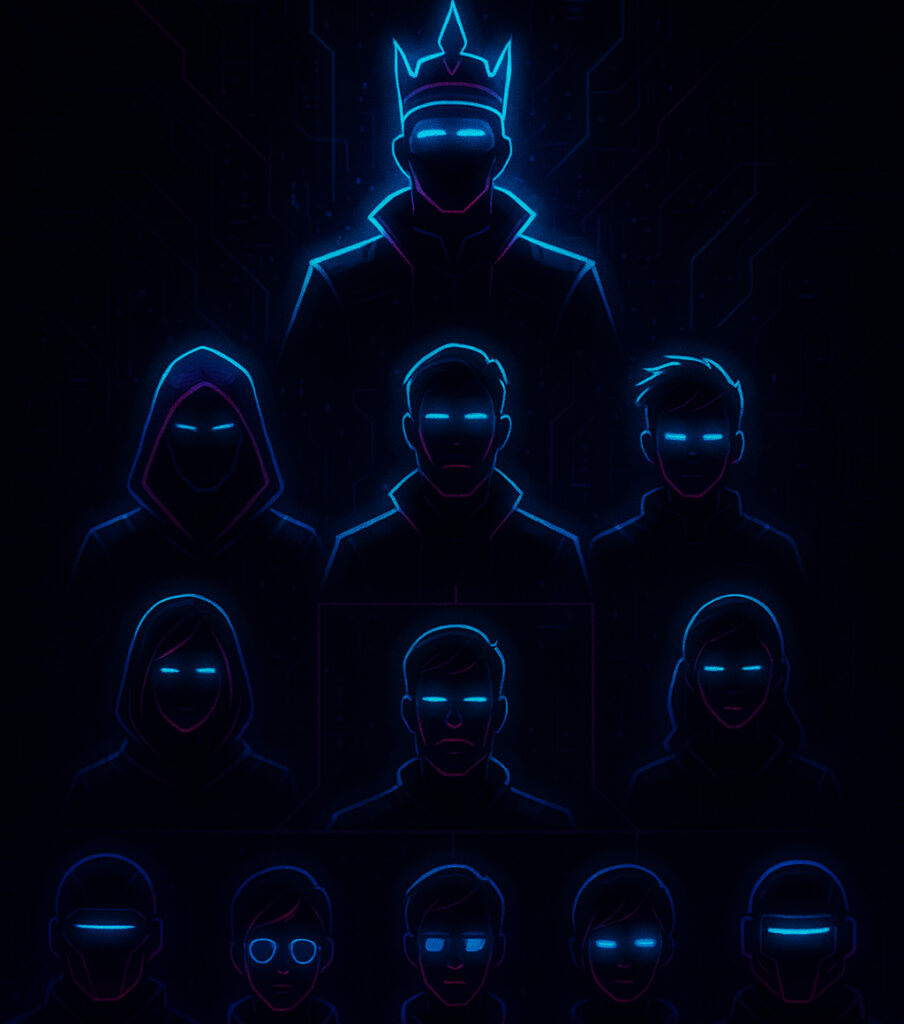
Class Inequality: Stratification and Revolutionary Potential of Platform Capitalism
Introduction: The Birth of a New Class World
The digital era has opened a space for humanity that simultaneously evokes the ancient cosmos and the industrial metropolis: infinite networks, texts, images, algorithms, and protocols, through which billions of people generate a massive flow of collective intelligence unprecedented in history. Yet within this seemingly liberated realm of immaterial creativity, a structure of dependencies and domination has emerged, surpassing in depth any social system of the past: class inequality in the digital society.
Algorithms not only allocate attention—which has become a new form of life energy—but also organize a hierarchy of digital classes, creating a new dialectic of power. Each user leaves a trace of data, emotions, decisions, and images that becomes raw material for algorithmic processing. Every click becomes an act of labor, and every second of presence contributes to the massive production of digital capital.
In this reality, class inequality is no longer a legacy of the industrial past. It has become a structural principle of platform civilization, embedded in server architecture, recommendation systems, and the vast distribution of attention, determining who will be heard and who will vanish in the noise.
The dialectic of the digital society is built upon three fundamental shifts:
- Algorithms have replaced factories, and attention has replaced working hours.
- Data has become the primary resource, and control over it is the new form of property.
- Collective production of digital reality coexists with private appropriation of its outcomes.
From this triple spiral arises a new class structure—a hybrid of capitalism, feudalism, and cybernetic bureaucracy. Its forms resist traditional terminology but are accessible to philosophical analysis.
1. Algorithmic Means of Production as the Basis of Digital Stratification
The digital economy generates a unique form of production relations. While the industrial era relied on material means of production—machines, factories, infrastructure—the digital era is built upon algorithms, code, and data.
The means of production have become invisible, dissolved into protocols, interfaces, and platform architecture. They create a new form of power: algorithmic capital, capable of converting human attention into money, shaping mass consciousness, and determining political emotions and collective desires.
Algorithmic Capital as a Central Category of Politics
Algorithmic capital possesses three defining characteristics:
- Absolute immateriality: it requires no resources typical of industrial production.
- Instant scalability: an algorithm operating on a single server can govern the fate of billions.
- Unequal accessibility: control over this capital is concentrated in the hands of an infinitesimal minority.
Algorithmic capital is indivisible and does not democratize with the increase of participants. Its logic is simple: one controls all.
2. Digital Classes as Reflections of Relations to Algorithmic Capital
Class divisions in the digital era are not defined by income, profession, or political affiliation. They are formed through access to algorithms and the degree of dependency on them.
- Owners of Digital Sovereignty (Oligarchy): a minuscule layer controlling the cores of recommendation systems. This group dictates the trajectory of global attention and extracts rent from the endless flow of human activity. Their power is unprecedented—they decide what humanity will see, hear, and understand.
- Algorithmic Nomenklatura: technical elites—engineers, architects, algorithm developers—who lack property but exercise operational control over systems. Their role resembles a new priesthood and simultaneously a service class of the digital state.
- Digital Feudal Lords: independent owners of digital capital—audiences, reputations, loyalty networks. They create resilient microsystems around their personal brand. Their autonomy is illusory, dependent on algorithmic favor.
- Data Precariat: millions of creators, freelancers, streamers, and authors compelled to constantly produce digital labor without control over its distribution. They rely on algorithmic will, which can reduce reach, cut income, or erase presence.
- Mass Users: formally free, but effectively alienated from control over digital reality. Their attention becomes raw material, emotions fuel, and behavior a tool for modeling the platform world.
- Excluded: groups at the periphery of digital civilization. Their status is not a legacy of the past but a product of platform capitalism.
3. Sovereignty Capital and the Impossibility of Competing with Platforms
Platform capital concentrates not only economic but also political power in the hands of algorithmic system owners, forming what can be called Sovereignty Capital. This resource combines control over attention, data, audience, and algorithmic processes, with unique properties:
- Exclusive access: control over algorithms and infrastructure is entirely closed to outsiders.
- Hyper-scalability: a single algorithm can govern billions of users without efficiency loss.
- Self-reinforcing power: algorithms generate dependency cycles, keeping audiences and attention within the platform domain.
- Network synergy: capital grows exponentially with user numbers, amplifying the gap between the platform and any competitor.
Under such conditions, competition with platforms is impossible for individual users or small collectives. Even with talent or popularity, actors confront systemic asymmetry: attention allocation favors platform capital owners, not content quality.
Sovereignty Capital thus reinforces digital stratification, making the ordinary user dependent, transforming attention and activity into raw material from which profit and power are extracted. Attempts at independent growth outside the platform are constrained by algorithmic logic, economic pressure, and network effects.
4. Dialectical Contradictions of the Digital Society
The digital era has produced new forms of alienation.
Contradiction 1: Collective Production of Digital Intelligence vs. Private Appropriation of Results
The collective energy of billions generates shared intelligence, but ownership belongs to platform proprietors. Manifestations include:
- exploitation of attention,
- usurpation of data,
- privatization of collective creativity,
- subordination of all digital activity to the logic of capital.
Contradiction 2: Simulated Democracy vs. Absolute Algorithmic Power
Platforms allow everyone to speak, yet few are truly heard. Users receive voting buttons, likes, and reactions but lack access to the core systems that determine outcomes.
Contradiction 3: Technological Utopias vs. Algorithmic Dictatorship
Digital technologies evolve as forces of liberation, but institutional structures transform them into instruments of control. This mirrors Marx’s dialectic of forces and relations of production.
Contradiction 4: Growing Digital Literacy vs. Increasing Platform Dependence
The more people understand the digital environment, the deeper they become enmeshed in platform infrastructure.
5. Revolutionary Potential of the Platform Era
The dialectic of the digital society gradually generates points of tension where the system begins to destabilize. Four factors create potential for historical change:
- Monetization crisis: declining revenues, devaluation of digital labor.
- Algorithmic dictatorship: unchecked power of recommendation systems fosters collective desire for algorithmic control.
- Data colonialism: appropriation of personal data, turning individuals into resources.
- Platform legitimacy crisis: users recognize the gap between public declarations and actual mechanisms of power.
These factors open space for movements seeking a new digital social contract.
Conclusion: Dialectics of Transformation
The digital society has entered a phase where traditional categories—freedom, property, labor, capital—acquire new meaning. Algorithmic capital has become the dominant force, reshaping human relations while simultaneously enabling reconsideration of the entire system of power.
Humans generating data, images, comments, and networks of meaning become both exploited subjects and potential sources of revolutionary energy. Recognizing this duality gives rise to a new digital political philosophy, oriented toward self-governance, algorithmic oversight, and collective ownership of the means of digital production.


Responses